
Portfolio Risk Analysis
See the risk inside your entire accounts receivable portfolio — not just one customer at a time.
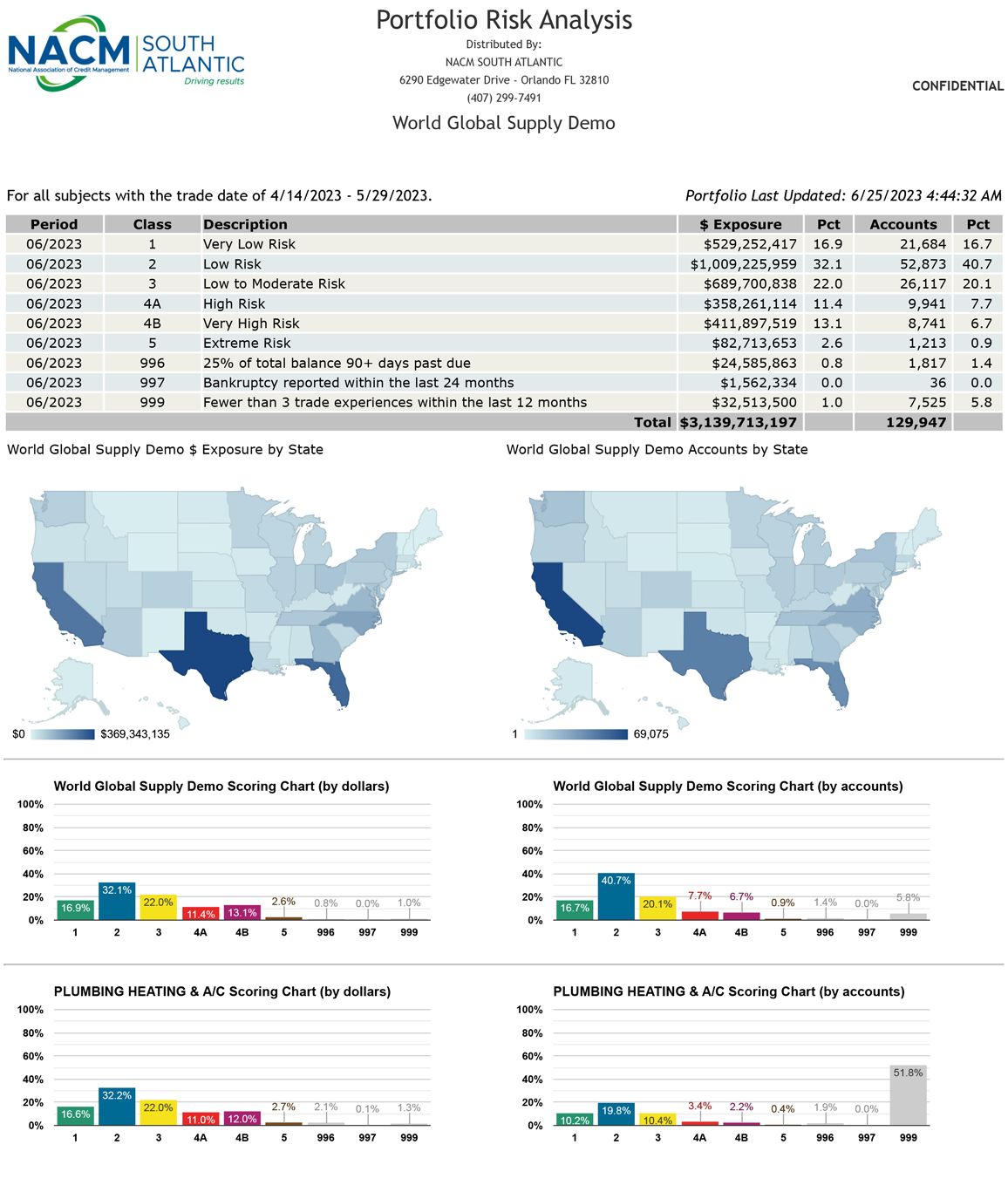
NACM South Atlantic’s Portfolio Risk Analysis gives participating members a broader view of customer credit risk by scoring and organizing accounts across their entire submitted portfolio. Identify changing risk, measure exposure, compare payment behavior, and focus your credit department’s attention where it matters most.
Know where your credit risk is concentrated
Reviewing individual credit reports is an important part of credit management, but it does not always reveal what is happening across hundreds or thousands of customer accounts. Portfolio Risk Analysis brings that information together so your credit team can quickly identify areas that deserve additional attention.
Measure Risk
Accounts are scored and organized into risk categories ranging from very low risk through extreme risk, along with additional exception categories.
Measure Exposure
See both the dollar value and number of accounts represented within each risk category so large concentrations become easier to recognize.
Find Concentrations
Geographic heatmaps help identify where receivable exposure and customer accounts are concentrated throughout the United States.
Compare Performance
Compare your portfolio characteristics with industry information, NACM data, and participating credit groups where applicable.
Turn accounts receivable data into something you can act on
Instead of reviewing a long customer list without context, Portfolio Risk Analysis organizes your receivables into meaningful categories that help you see the relative risk within the portfolio.
Risk classifications
Quickly see what percentage of your portfolio falls into very low, low, moderate, high, very high, and extreme risk categories.
Dollar exposure
Determine how much receivable exposure is associated with each level of risk.
Account exposure
Compare dollar concentration with the actual number of customer accounts involved.
Geographic analysis
View exposure and account concentrations by state through an easy-to-read heatmap.
Move from portfolio totals to customer detail
The analysis provides both a high-level portfolio view and the ability to examine the
accounts behind the numbers.
Portfolio Risk Categories
Understand how receivable dollars and customer accounts are distributed across multiple levels of credit risk.
Customer-Level Drilldown
Drill into risk classifications to review the individual customer accounts contributing to a particular risk category.
Aging & Payment Information
Incorporate accounts receivable aging and reported payment behavior into your overall portfolio review.
Portfolio Comparisons
Add context by comparing portfolio scoring with available industry, NACM database, and participating credit group information.
Geographic Exposure
Identify states where customer counts and outstanding receivable dollars create meaningful concentrations.
Spreadsheet Export
Export portfolio information to a spreadsheet when additional internal review, analysis, or reporting is needed.
Your greatest risk may not be your largest customer.
A customer-by-customer credit review can miss broader trends. Portfolio analysis gives credit managers another perspective by showing where risk is accumulating across the entire accounts receivable base.
Spot increasing concentrationsRecognize when a meaningful percentage of receivables falls into higher-risk categories.
Prioritize account reviewsUse portfolio scoring to help determine which customers may warrant closer attention.
Communicate risk internallyCharts and portfolio summaries can make credit risk easier to explain to management.
Your A/R data becomes a credit management tool
Contribute Your A/R Data
Members electronically submit accounts receivable information to NACM through the established data contribution process.
NACM Matches & Analyzes Accounts
Customer accounts are incorporated into the NACM trade credit information environment and evaluated for portfolio analysis.
Review Your Portfolio
Access scoring, exposure, account concentration, geographic information, and customer-level detail through the Portfolio Risk Analysis tool.
Make your contributed data work harder
Included for qualifying NACM data contributors
Portfolio Risk Analysis is one of the tools NACM South Atlantic makes available to participating members who electronically contribute accounts receivable data. There is no need to purchase individual portfolio reports each time you want to evaluate your customer base.
Want to see what Portfolio Risk Analysis can show you?
NACM South Atlantic can provide individual training and an online demonstration of the Portfolio Risk Analysis tools.

